
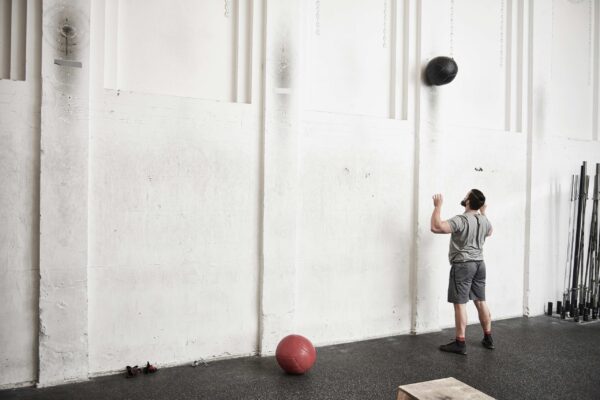
Wall ball is called one of the most effective exercises in modern crossfunctional fitness, which is most often found in workout complexes (WOD). Two main advantages of this exercise are noted: developing proper squatting skills and gradually increasing work capacity. Sometimes wall ball is used for training purposes by athletes who need to keep themselves in shape. This review examines additional features of wall ball and familiarizes readers with alternatives to this exercise.
Main reasons for wall ball’s popularity
There are many different reasons why wall ball is beneficial for both beginners and experienced athletes.
Three key reasons should be highlighted:
- Metabolic conditioning. Such exercises with full range of motion allow engaging all body muscles. The muscles of the back, legs, glutes, core, shoulders, and arms work. As a result, it’s possible to develop strength and learn to react quickly. With this movement, you can effectively develop work capacity in a highly functional movement pattern (for example, squat with press), which is perfect for both athletes and people completely far from sports. In addition, wall ball is suitable for people who want to find an alternative to running and other various monostructural physical conditioning options.
- Functional movement modeling. By performing squats with arms raised overhead, the athlete thereby receives an ideal “movement pattern” that even a beginner can master. Wall ball is often used to improve skills and technique of proper squatting through the front of the body: heels down, back positioned vertically, torso in tension. Wall ball is also used as a warm-up before starting strength training, as this exercise includes both active and passive control throughout the full range of motion.
- Scalable movement. Wall ball is chosen for mastering squatting technique regardless of the athlete’s specific fitness level. Due to the cyclical nature of the exercise, it helps focus attention on squatting skills. At the same time, the load on the chest along with the finishing overhead position allow maintaining proper balance and contribute to strengthening the core muscles. These advantages “work” at any stage of squats.
Despite all the features and many positive characteristics, athletes are interested in alternative options that can “replace” wall ball.
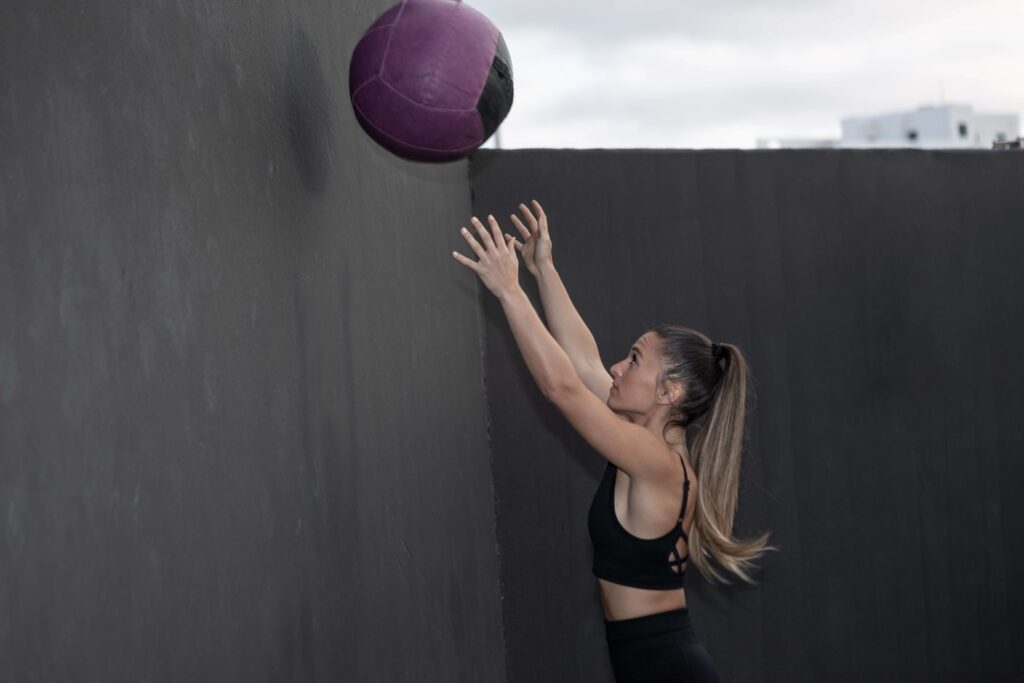
Popular alternatives
When coaches and some athletes want to modify/complicate certain exercises, they consider the most effective alternatives. In the case of wall ball, alternatives are also considered that are designed to increase work capacity, improve squatting technique, and thereby adapt to the individual needs of a large number of people.
Main alternatives:
- Kettlebell Thruster – this is quite a popular exercise that is in particular demand among experienced athletes and some coaches. This exercise increases the demands on movement coordination, core muscle strength increase, unilateral control, and upper back strength. This exercise provides many undeniable advantages that will be relevant for athletes with different levels of training.
- Ball Clean – this exercise does not involve the process of lifting the ball or other objects overhead. Despite this, it’s called no less useful for developing work capacity and functional movements in people who experience some problems when lifting the ball overhead. Thanks to this successful modification, it was possible to preserve useful cyclicality as well as a quite similar movement pattern. As a result, we can talk about scalability, which will be especially noticeable when working in groups.
- Jump squats – sometimes standard jumps are also considered as an alternative, but specifically jump squats with moderate intensity (not at the athlete’s maximum capacity) can help practice squatting technique and bring it to automaticity. In addition, this exercise also allows developing the ability for triple extension. These squats can be easily scaled for all levels of athlete preparation. Due to the absence of the overhead arm raising element, the heart rate can be slightly reduced. However, this is quite insignificant if the athlete performs jumps from the floor (there is an increase in energy expenditure).
It’s also necessary to understand the features of how to properly choose a suitable replacement. First of all, everything depends on what results should be achieved and what goals were initially set:
- for cardio and endurance, thruster and jump squats are recommended;
- for strength development, front squat and goblet squat are chosen;
- for beginners in sports, it’s best to choose goblet squat and push press;
- if you need to find exercises without equipment, air squat + jumps are recommended.
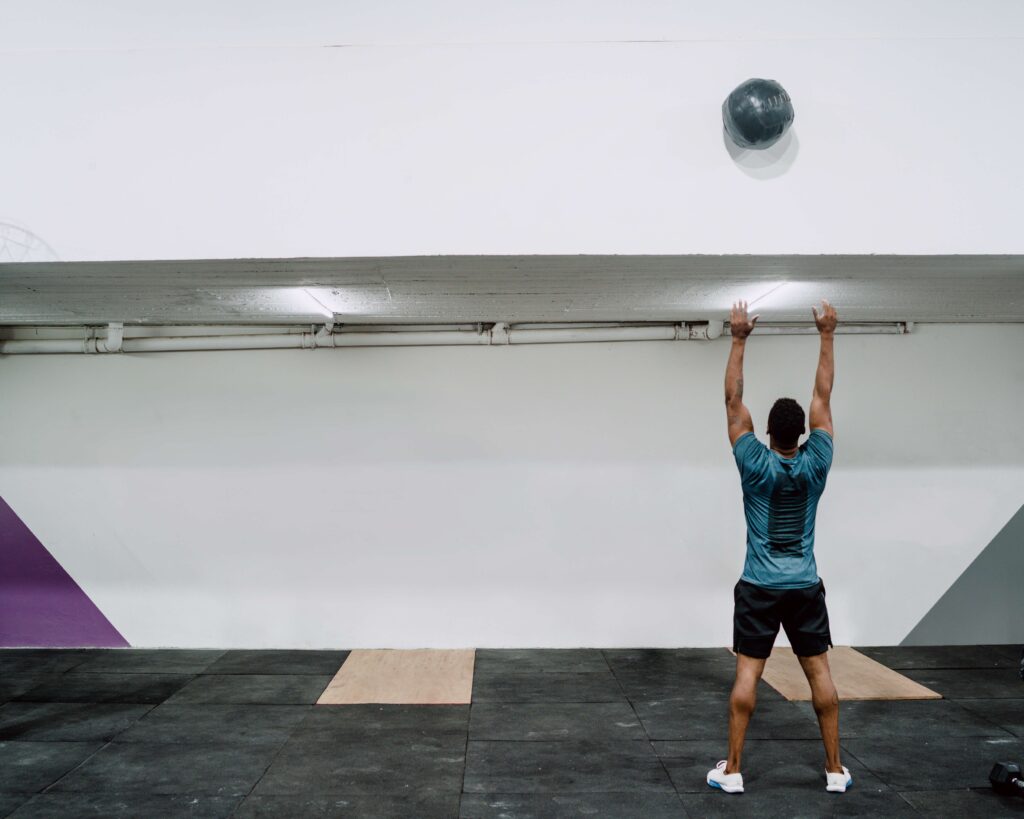
The wall ball exercise in crossfunctional fitness is called useful and practically irreplaceable. Its main value lies in the combination of an effective squat with an explosive movement and necessary cardio load. But if there’s no ball or wall at hand, or there are certain health limitations, you can always consider a list of no less effective alternatives. At the same time, the quality of training will not suffer. After all, in crossfunctional fitness, it’s not the specific equipment that’s important, but the functional movement and intensity.
Comments are closed