

People who are actively searching for effective weight loss methods are increasingly choosing crossfunctional fitness. This is primarily because these workouts successfully combine weightlifting, gymnastics, and even cardio. Crossfunctional fitness is known for intense and quite varied workouts, which help trigger the calorie burning process in the body and strengthen muscle mass. All of this contributes to a stable and quite healthy weight loss process. This review examines how the comprehensive approach offered by crossfunctional fitness helps achieve desired weight loss results.
Crossfunctional fitness and its key principles
Crossfunctional fitness is a special sports training program that successfully combines elements and aspects of several sports disciplines at once. This comprehensive approach is aimed at improving physical abilities, among which endurance, strength, speed, flexibility, and movement coordination deserve special attention.
The main principles of crossfunctional fitness:
- Intensity. Despite the brevity of sessions, they are considered quite intense, which helps stimulate metabolic processes and trigger the fat burning process.
- Variety. By alternating movements and workouts, different muscle groups are engaged, which also accelerates metabolism in the human body.
- Functionality. All exercises were developed taking into account natural body movements, which helps develop strength for its application in everyday life.
Each crossfunctional fitness workout is designated by the corresponding abbreviation – WOD (Workout of the Day). All workouts are unique and contribute to comprehensive physical development.
The EPOC effect
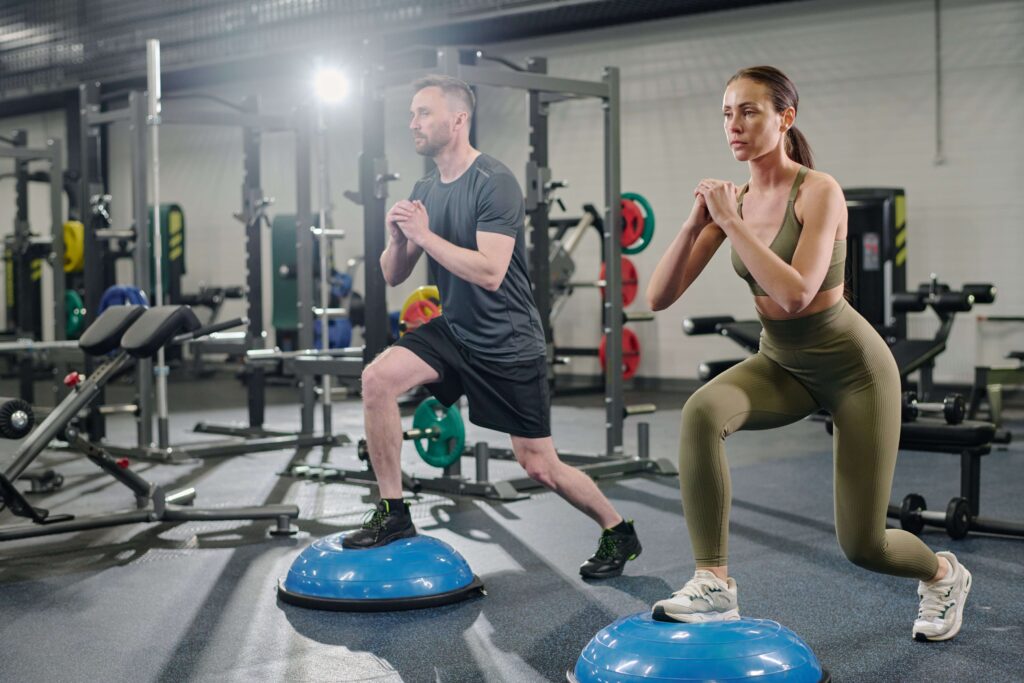
One of the key mechanisms of crossfunctional fitness is the EPOC effect, which refers to excess post-exercise oxygen consumption. All workouts are characterized by high intensity and intervals, triggering this effect into action. Thanks to EPOC, the continuous calorie burning process occurs at high speed even after the workout ends (sometimes this effect lasts up to 36 hours).
For weight loss, a gradual increase in energy expenditure after training is extremely beneficial. Thus, a person gets the opportunity to burn additional calories even without the need to perform another set of exercises. To induce this effect, the advantages of high-intensity interval training (HIIT) are most often used, which contribute to sustainable weight loss.
Building muscle mass
Crossfunctional fitness is called no less beneficial for those who want to build muscle mass. After all, this process is considered integral during weight loss. When performing various exercises, the athlete engages the main muscle groups – thighs, glutes, back, shoulders. To achieve maximum effect, weight is additionally applied, which also contributes to muscle mass development along with increased bone density.
When building muscle, the basic metabolism in the human body occurs, meaning the body can burn more calories even at rest. As a result, it’s possible to maintain a calorie deficit, which is especially useful and important for effective and long-term weight loss.
Improved insulin sensitivity
It has already been proven repeatedly that crossfunctional fitness training has a positive effect on insulin sensitivity. Thanks to diverse high-intensity workouts, the human body’s ability to effectively use insulin improves: the risk of developing insulin resistance decreases, and blood glucose level regulation improves. By improving insulin sensitivity, the fat accumulation process can be prevented and weight can be reduced.
Improved insulin sensitivity has another no less important advantage: the risk of developing metabolic diseases, such as type 2 diabetes and cardiovascular diseases, decreases.
Frequency and duration of workouts

In order to reduce weight in crossfunctional fitness, it’s necessary to properly choose the optimal frequency and duration of sports workouts. For example, beginners should start with three workouts per week. As a result, they will be able to gradually adapt to upcoming loads, develop the necessary list of skills, and constantly work on improving their own physical fitness. This approach also helps reduce the risk of injury.
If you need to prepare for upcoming competitions or accelerate the weight loss process, you can choose the option of 4-5 workouts per week. The optimal program is called an effective combination of workout of the day complexes (WOD), strength training, and specialized training. Adaptation of training frequency is carried out taking into account individual factors of each person: age, lifestyle. This will help avoid body exhaustion and injuries. It’s necessary to organize at least one full day off per week from training.
Main types of workouts for effective weight loss
For effective fat burning, it’s recommended to choose high-intensity interval training (HIIT). Thanks to their high intensity and the ability to engage several muscle groups at once, you can maximally trigger the calorie burning process and the post-cooling effect (EPOC).
Popular workouts such as “Fran” or “Filthy 50” are called unique examples of intensity and comprehensive work of the entire body. For example, “Fran” is the perfect combination of thrusters and pull-ups, while “Filthy 50” consists of various exercises like box jumps, kettlebell swings, burpees with kettlebells. All these workouts and exercises were initially created with one important goal: maximum calorie burning + increased athlete endurance.
Comments are closed